Copyright © 2026 Yorke Antique Textiles
.avif)

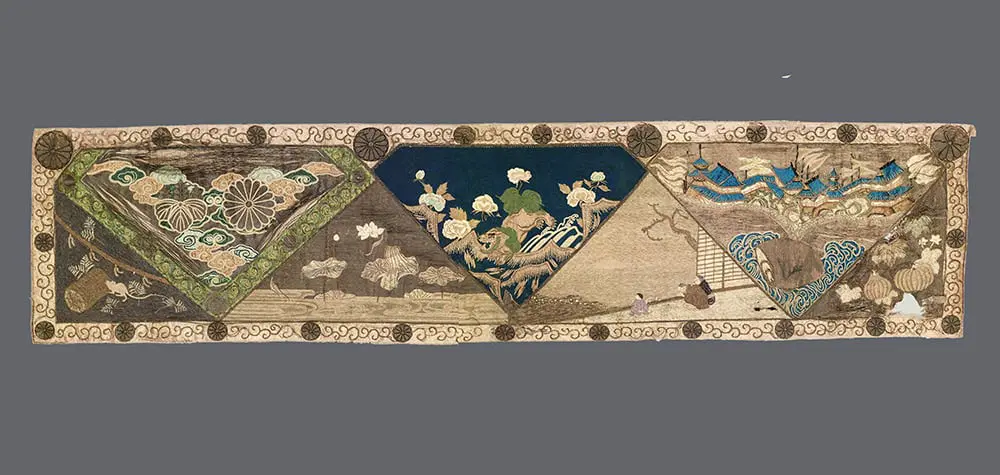
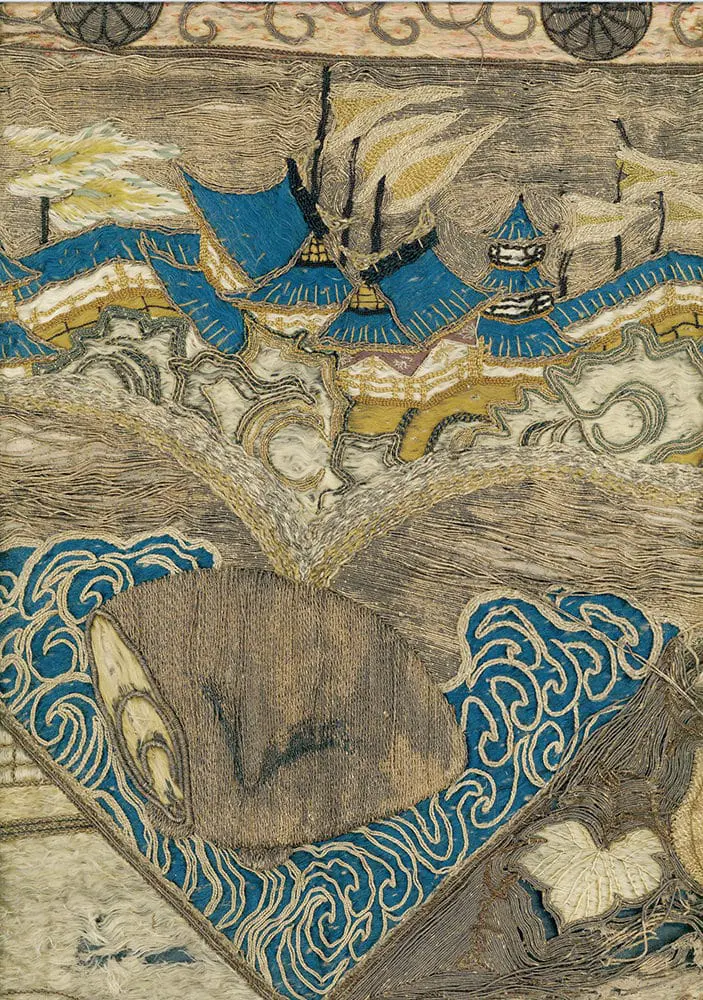

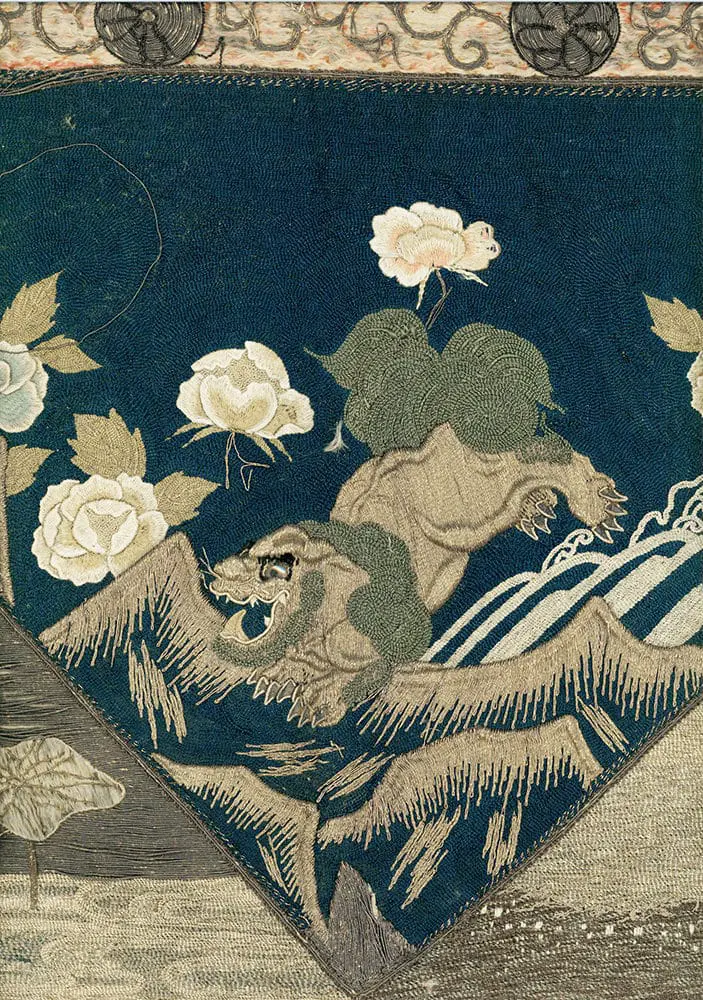
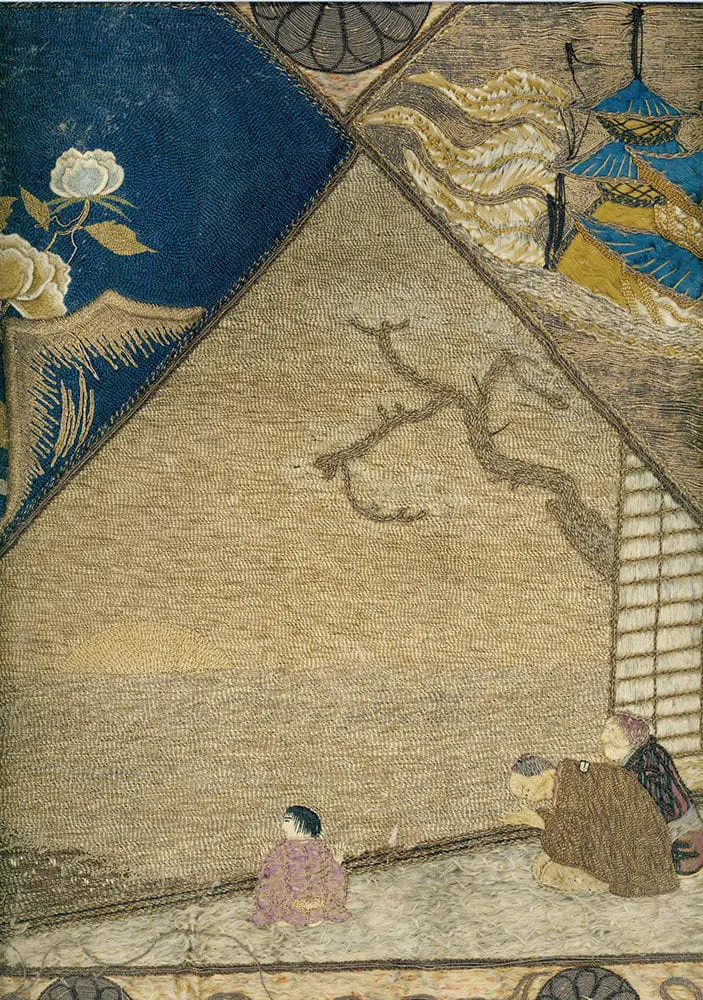
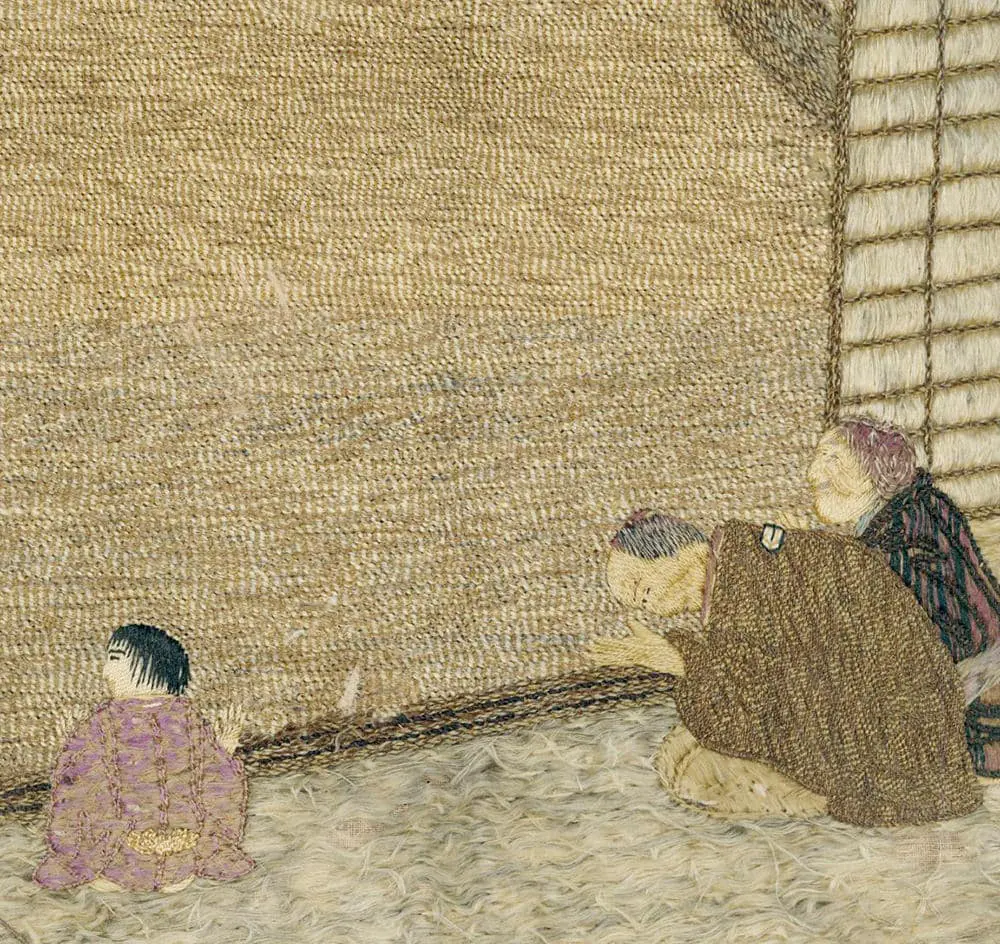
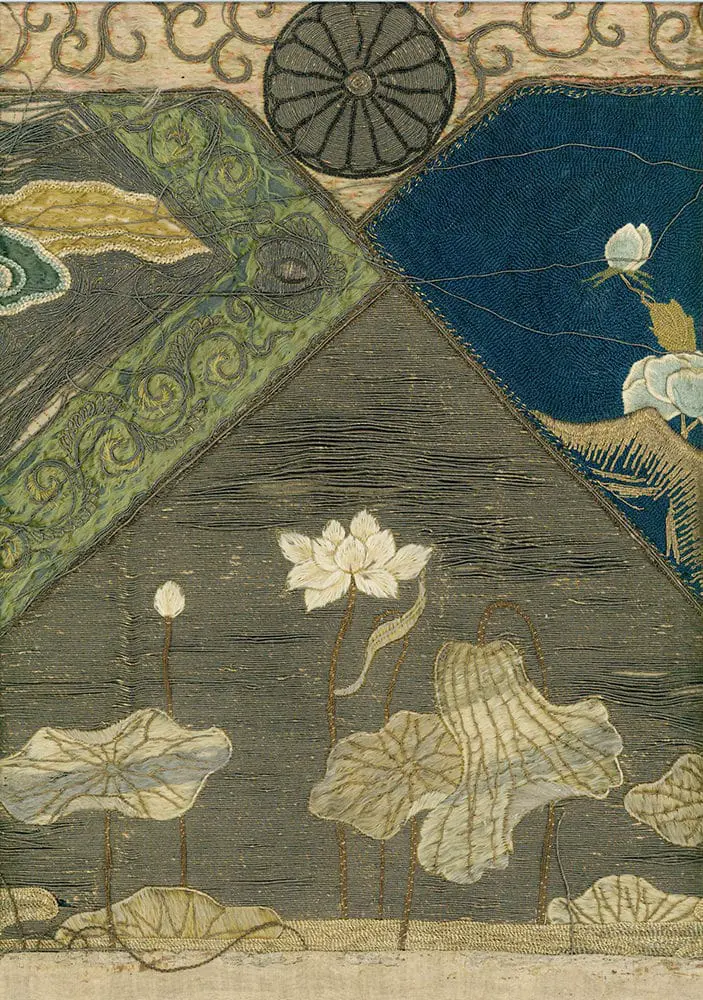
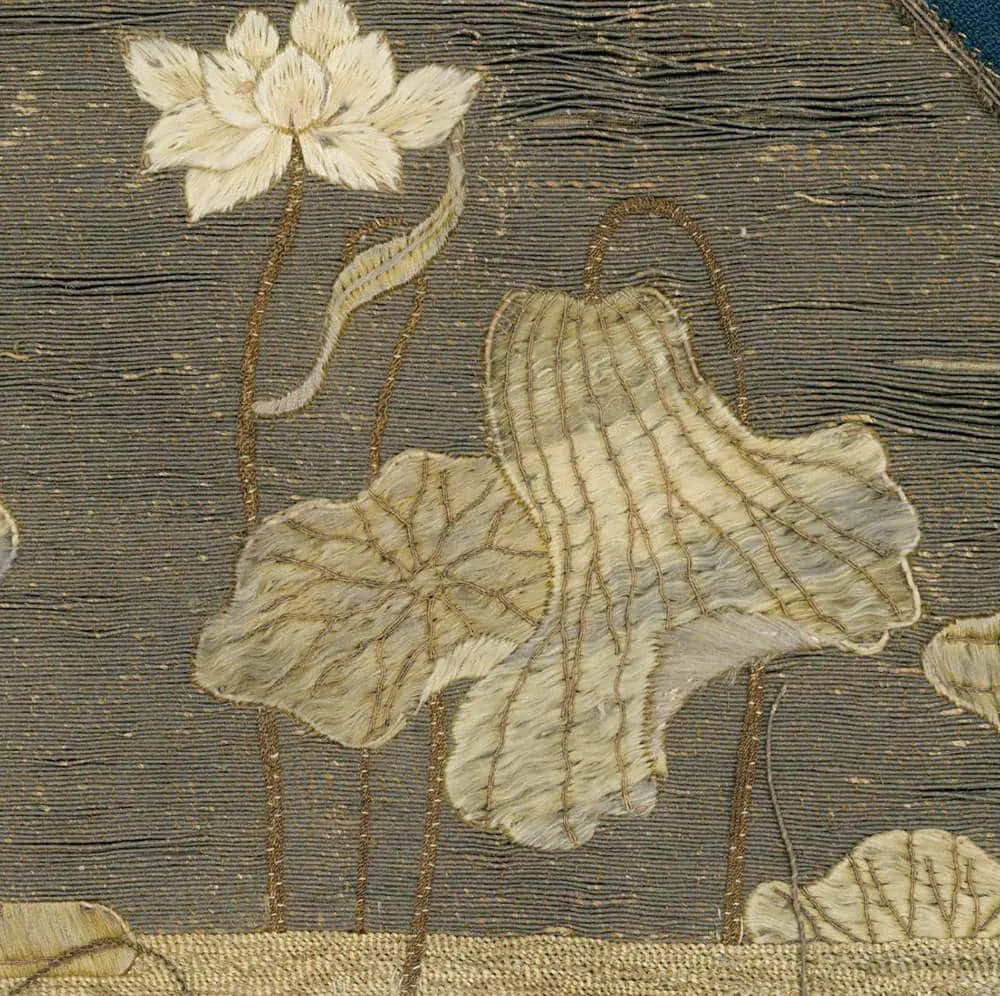
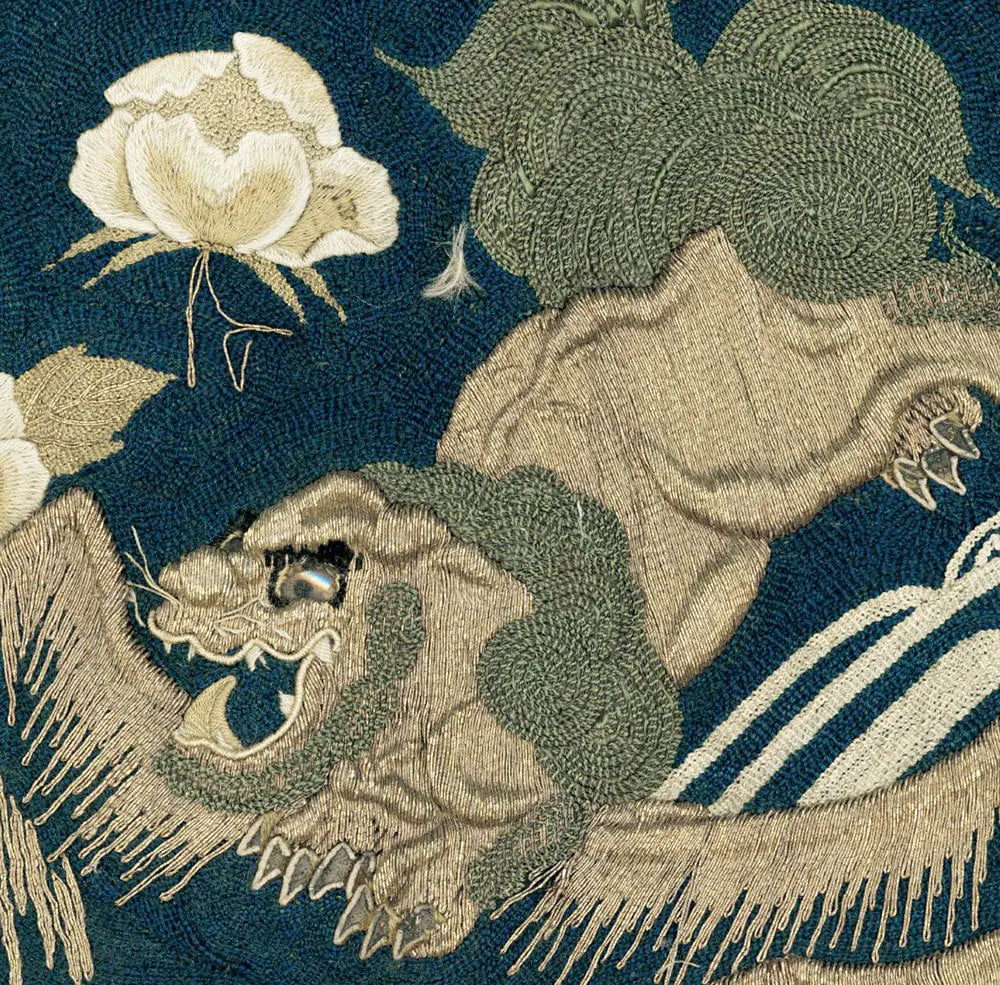
This rare and expansive Buddhist altar frontal, or uchishiki, is a significant liturgical textile dating from the early to mid Edo period (1603–1800). Measuring 86 inches (218 cm) in length, the piece consists of seven adjacent triangular panels embroidered onto a foundation of hand-spun and hand-woven linen—a hallmark of pre-industrial craftsmanship. In a temple setting, such textiles were used to drape the altar (shumidan), with the triangular forms often symbolizing lotus petals or providing a sacred boundary for ritual offerings.
While the three central sections remain in good condition, the surrounding panels exhibit severe wear, including holes and loose threads that testify to centuries of ceremonial use. This honest degradation provides a poignant "wabi-sabi" aesthetic, marking the textile not just as an art object, but as a silent witness to the religious life of Japan during its period of isolation.
This artwork is featured on pages 110-113 of Ceremonial Textiles of Japan, 18th to 20th Centuries. This book, published by Yorke Antique Textiles, can be previewed or purchased on our website here.

Payment Options: We primarily accept PayPal for all transactions. Credit and debit cards are not accepted. If you prefer to pay by personal check instead of PayPal, please note this preference in the "Additional comments" field when placing your order.Ordering Process
To receive your PayPal invoice, simply fill out the form.
Shipping Details: We ship all orders to the address associated with your PayPal payment. Please ensure your PayPal shipping address is current and accurate.A phone number is required during checkout, as our shipping carrier may need to contact you regarding delivery questions.Shipping RatesUnited States and Canada: $20International destinations (air mail): $40
