Copyright © 2026 Yorke Antique Textiles
.avif)

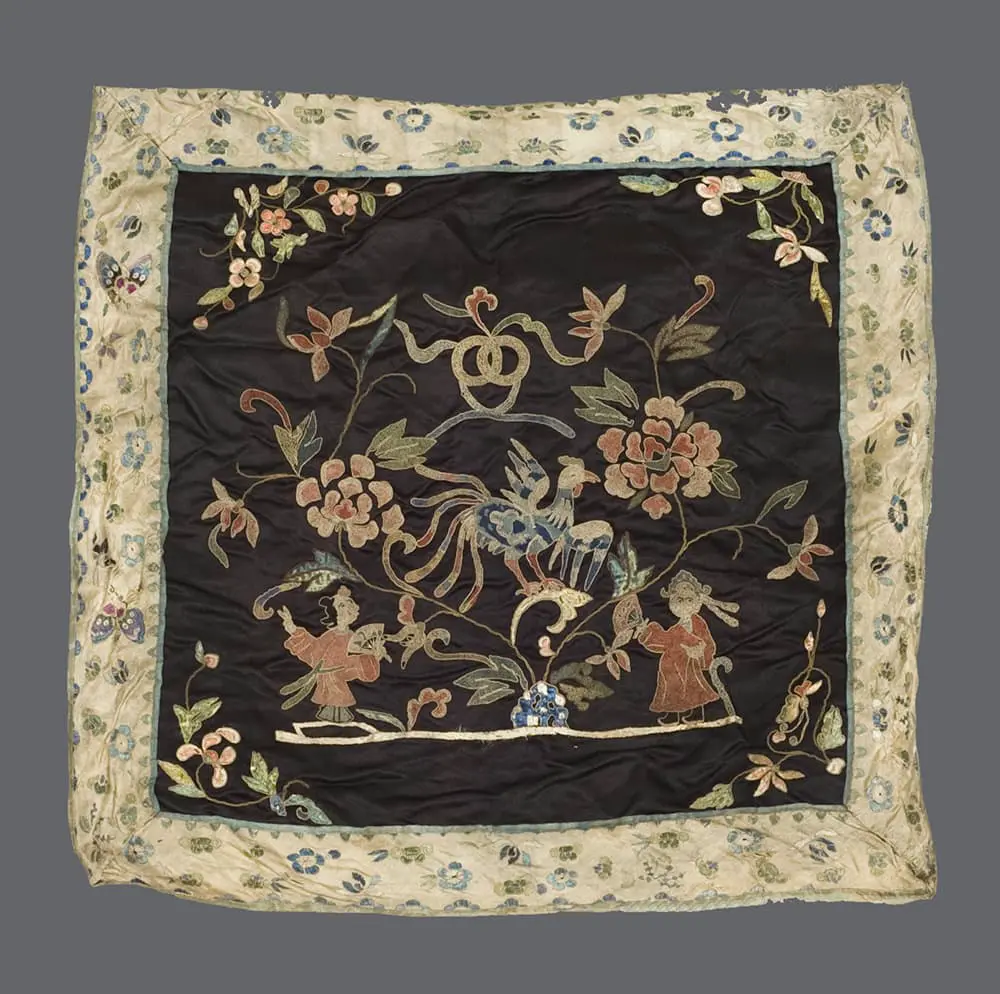
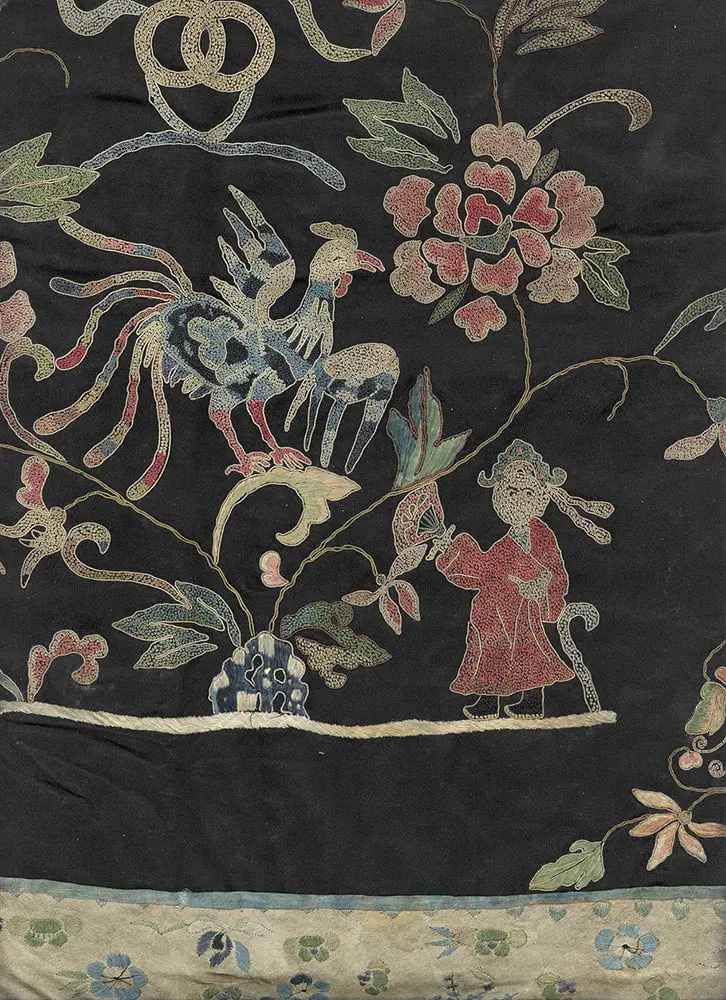
This exquisite square textile, originating from China during the mid-19th century (1830–1870), is a masterful example of late Qing Dynasty needlework. Measuring 17 inches by 17 inches (43 cm x 43 cm), the piece is centered on a deep, dark silk ground that provides a dramatic contrast for the vibrant embroidery. The central composition features a stylized phoenix—the empress of birds—standing beneath a flowering tree with oversized peonies. Flanking the base of the tree are two small figures in traditional robes, while a "twin rings" motif, symbolizing unity, floats above the avian form.
The panel is notable for its exceptional technical range, utilizing ultra-fine seed stitch (often referred to as "forbidden stitch") for the intricate floral centers and figure details, alongside lustrous silk floss worked in satin stitch. The central field is framed by a broad cream silk border decorated with a continuous vine of butterflies and blossoms, finished with a satin stitch border. The textile is backed by handmade linen, providing structural stability. It remains in very good condition, though general surface soiling suggests that professional cleaning could further enhance its appearance.

Payment Options: We primarily accept PayPal for all transactions. Credit and debit cards are not accepted. If you prefer to pay by personal check instead of PayPal, please note this preference in the "Additional comments" field when placing your order.Ordering Process
To receive your PayPal invoice, simply fill out the form.
Shipping Details: We ship all orders to the address associated with your PayPal payment. Please ensure your PayPal shipping address is current and accurate.A phone number is required during checkout, as our shipping carrier may need to contact you regarding delivery questions.Shipping RatesUnited States and Canada: $20International destinations (air mail): $40
