Copyright © 2026 Yorke Antique Textiles
.avif)


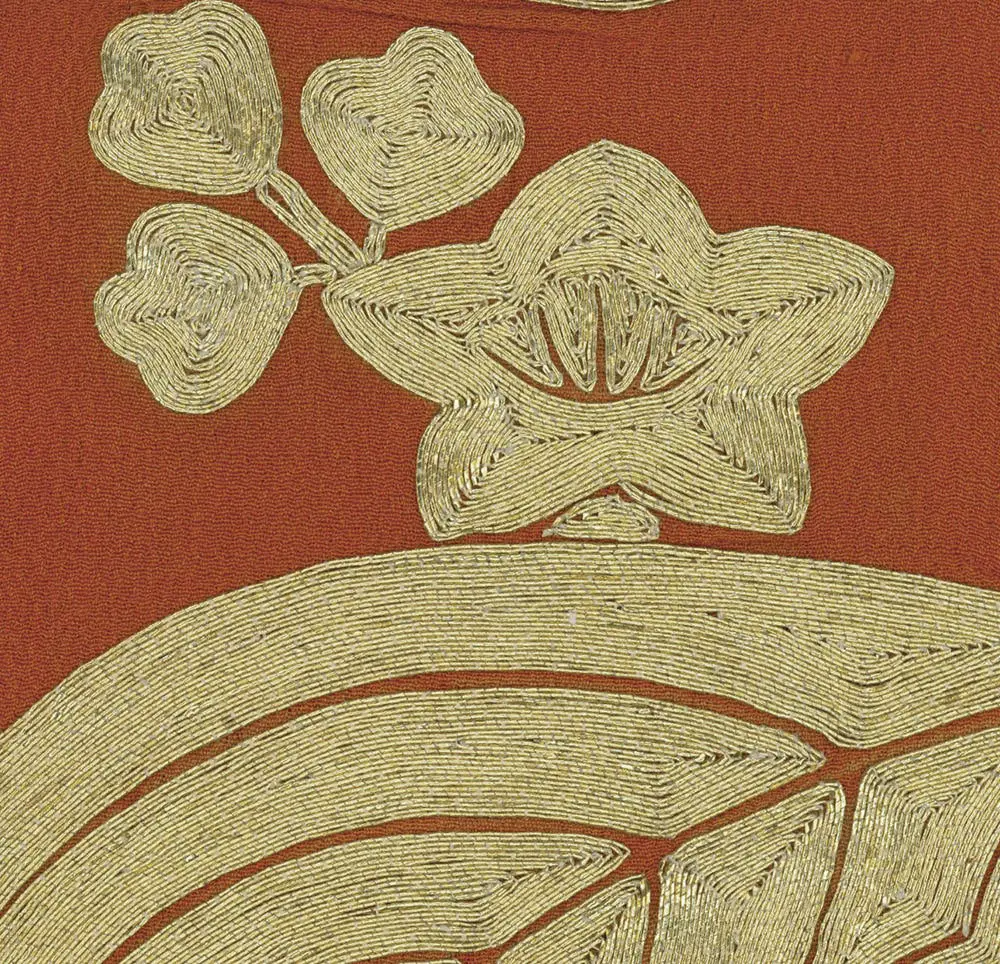
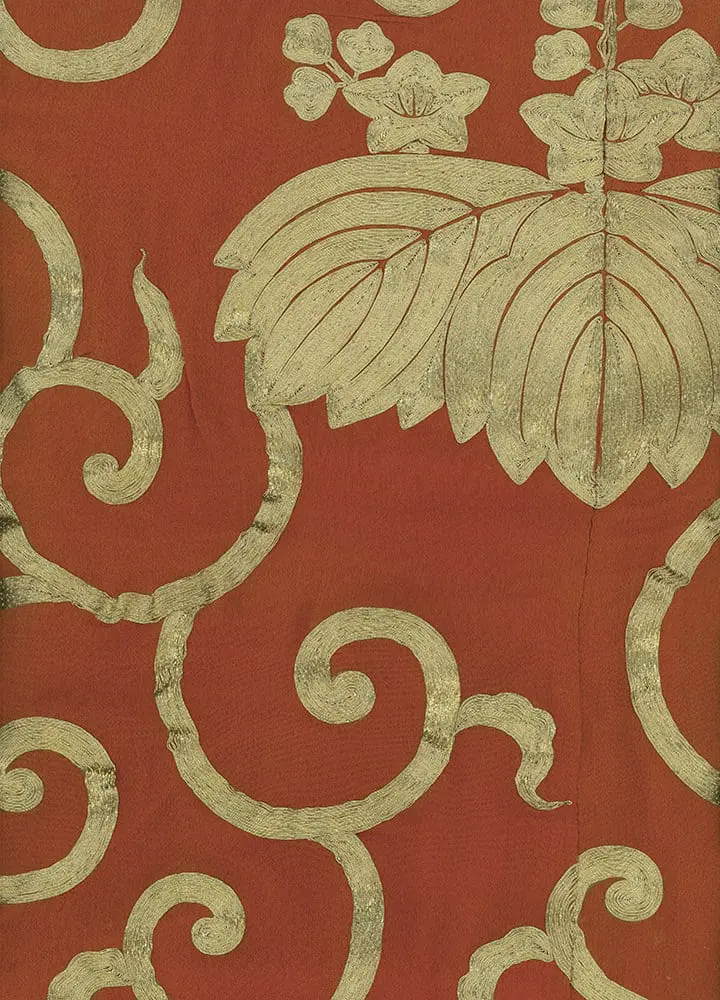
This fine chirimen (silk crepe) panel, dating to the late Edo period (1840–1868), is a vibrant example of high-status Japanese textile production. Measuring 34 inches by 34 inches (86 cm x 86 cm), the panel consists of two silk cloths meticulously stitched together and remains in very good condition.
The central focus is a large paulownia (kiri) motif, an auspicious symbol traditionally associated with the Japanese imperial family and government, representing power and virtue. This motif is flanked by scrolling vine patterns, all executed in shimmering gold-colored threads using the couching embroidery technique. The striking orange ground of the chirimen silk was achieved using beni (safflower) dye, a costly natural pigment prized for its vividness. This luxurious treatment extends to the reverse, which is finished with a fine silk satin lining also dyed with safflower.

Payment Options: We primarily accept PayPal for all transactions. Credit and debit cards are not accepted. If you prefer to pay by personal check instead of PayPal, please note this preference in the "Additional comments" field when placing your order.Ordering Process
To receive your PayPal invoice, simply fill out the form.
Shipping Details: We ship all orders to the address associated with your PayPal payment. Please ensure your PayPal shipping address is current and accurate.A phone number is required during checkout, as our shipping carrier may need to contact you regarding delivery questions.Shipping RatesUnited States and Canada: $20International destinations (air mail): $40
