Copyright © 2026 Yorke Antique Textiles
.avif)

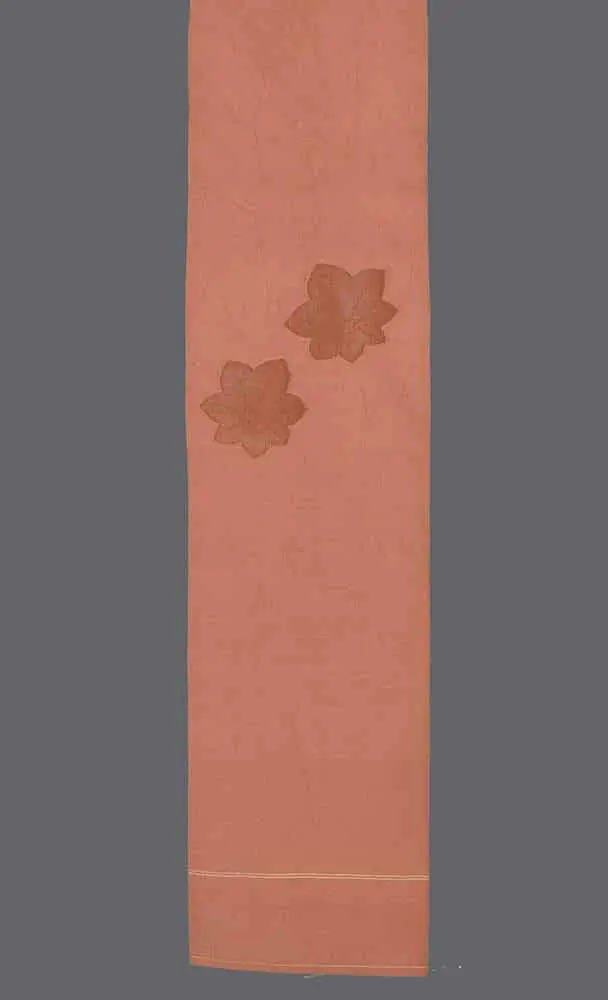
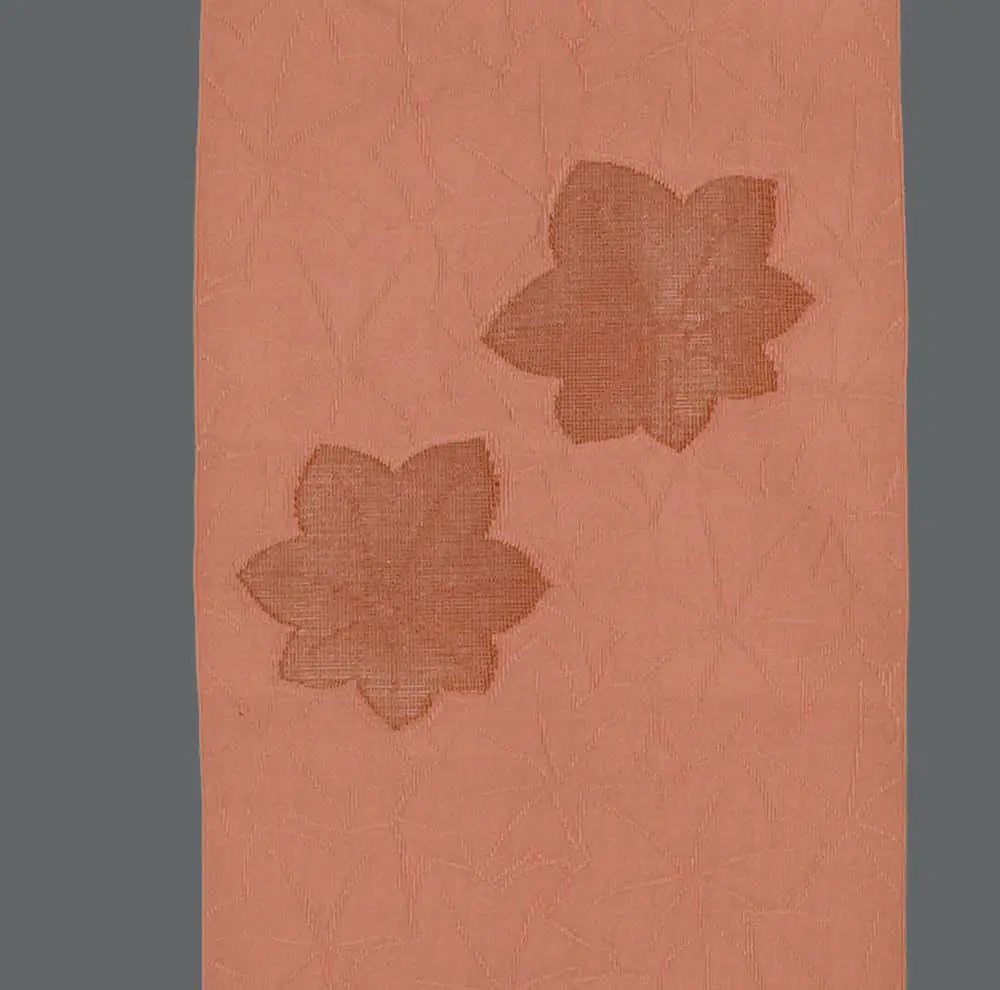
This elegant nagoya obi originates from Japan and dates to the mid-20th century (1930–1950). Measuring 142 inches in length with a main center width of 13 inches (361 cm x 33 cm), the textile tapers to a width of 6.5 inches (17 cm) at the ends, a characteristic structural feature of the Nagoya style designed for ease of wear. The obi is crafted from a rich, paprika-hued silk that features a sophisticated tone-on-tone texture. Half of the underside is lined with contrasting silver silk, and the entire piece remains in excellent condition.
The visual focus of the garment is the minimalist and modern depiction of lotus flowers. These motifs are created using raised threads, a technique that adds a subtle three-dimensional relief to the monochromatic ground. In Japanese culture, the lotus (hasu) is a powerful symbol of purity and enlightenment, as it rises unsullied from muddy waters. The placement of the flowers is understated and rhythmic, reflecting the refined aesthetic of the early to mid-Showa era, which often favored clean lines and bold, singular botanical elements over the dense patterns of previous generations.

Payment Options: We primarily accept PayPal for all transactions. Credit and debit cards are not accepted. If you prefer to pay by personal check instead of PayPal, please note this preference in the "Additional comments" field when placing your order.Ordering Process
To receive your PayPal invoice, simply fill out the form.
Shipping Details: We ship all orders to the address associated with your PayPal payment. Please ensure your PayPal shipping address is current and accurate.A phone number is required during checkout, as our shipping carrier may need to contact you regarding delivery questions.Shipping RatesUnited States and Canada: $20International destinations (air mail): $40
