Copyright © 2026 Yorke Antique Textiles
.avif)

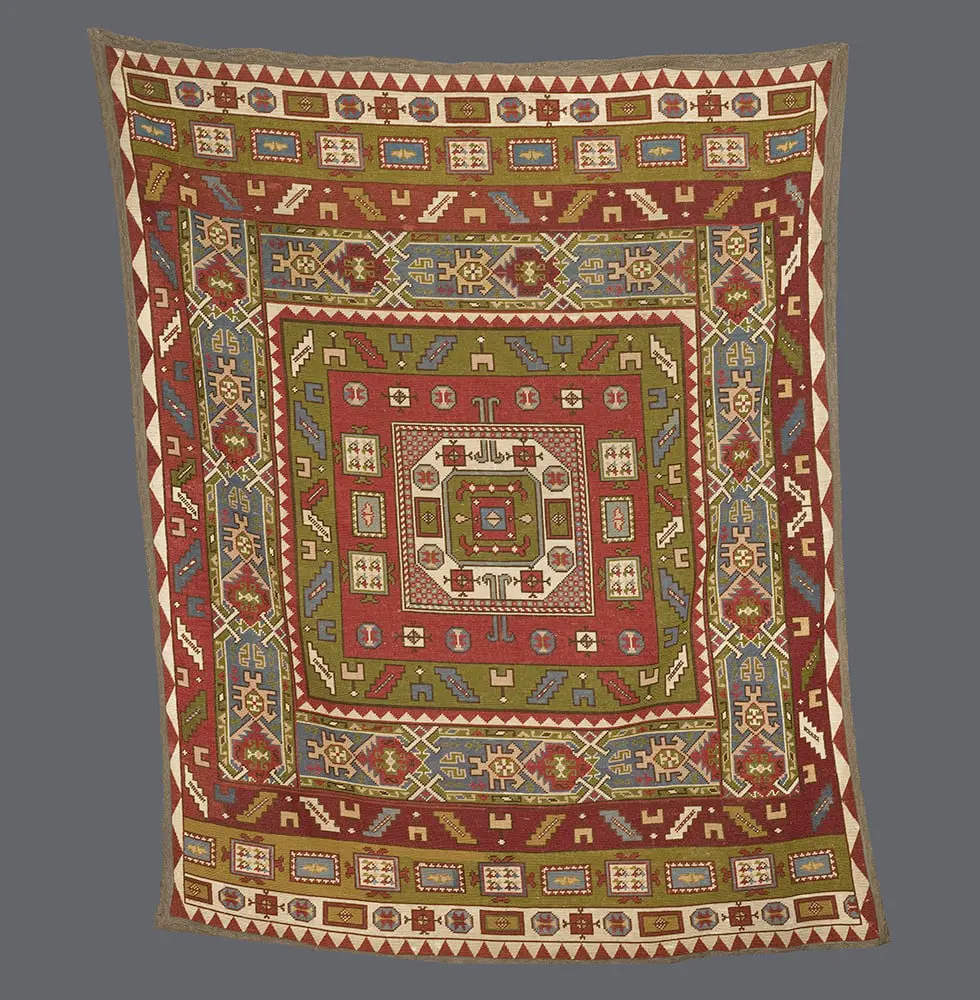
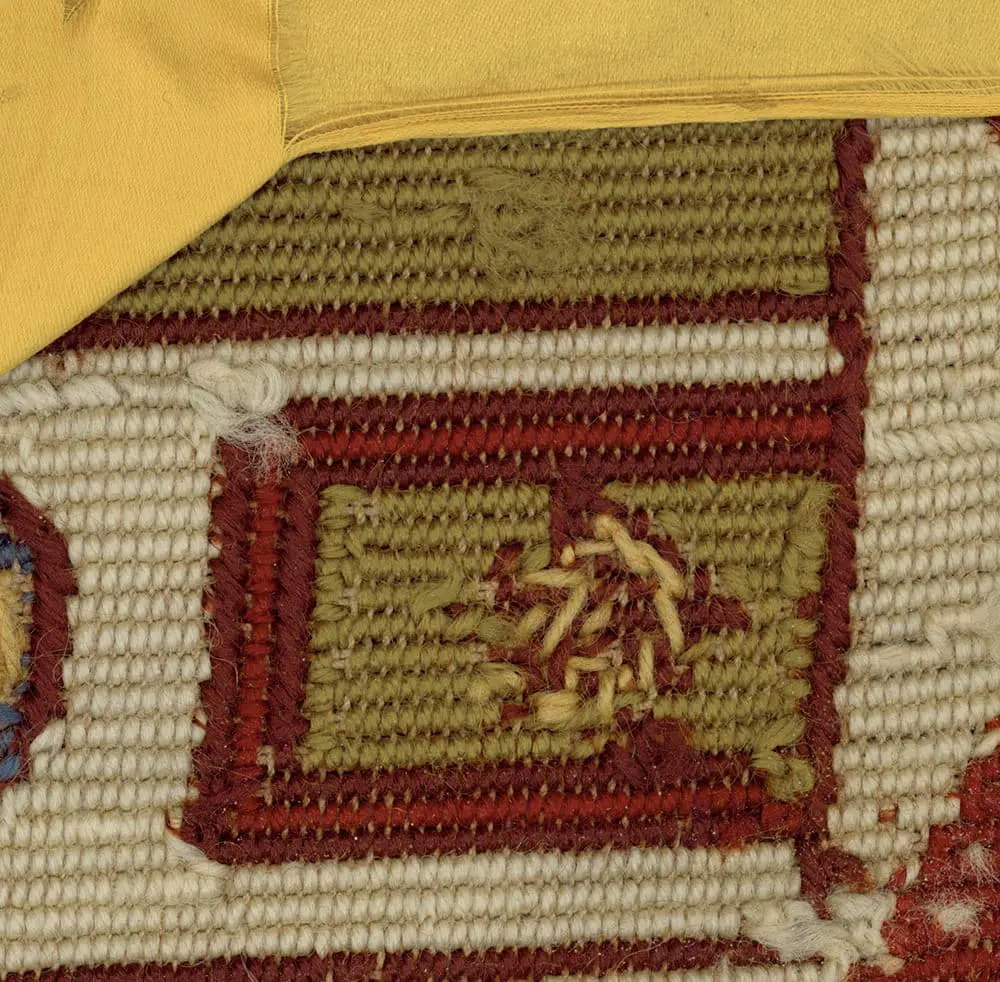

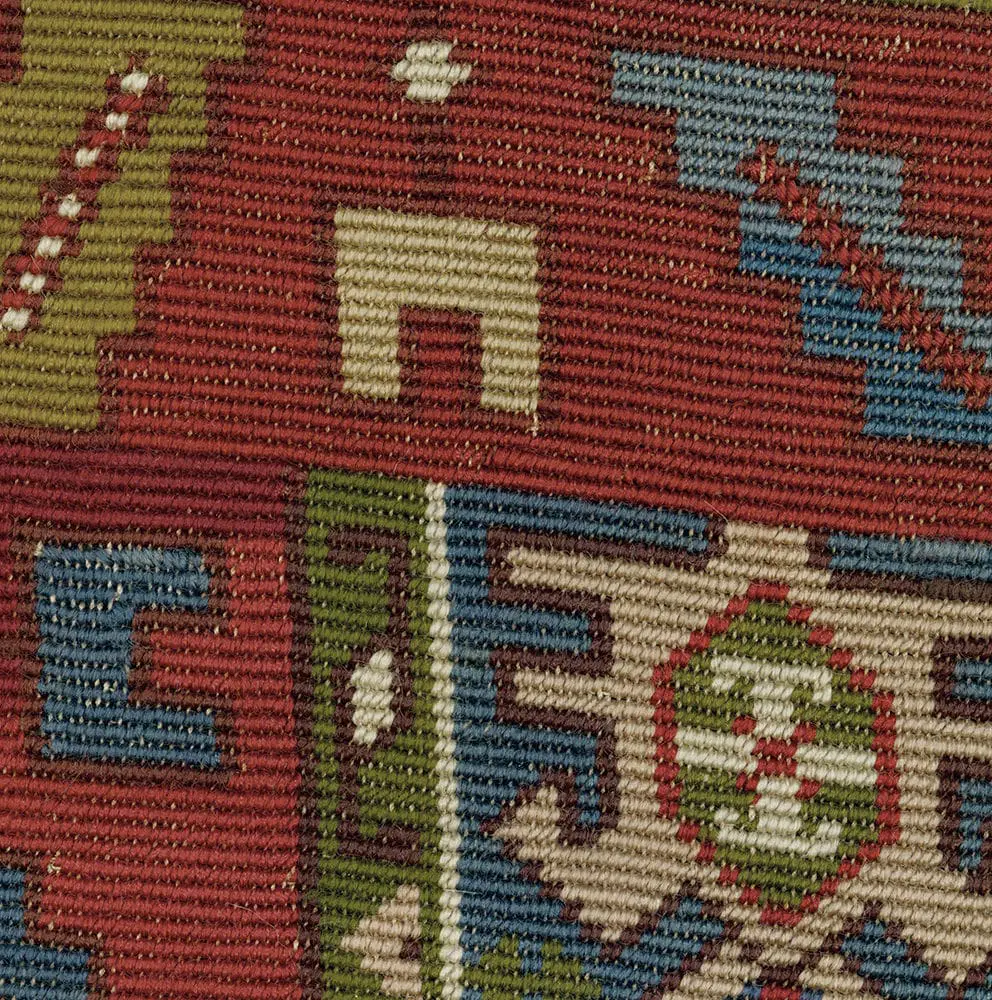

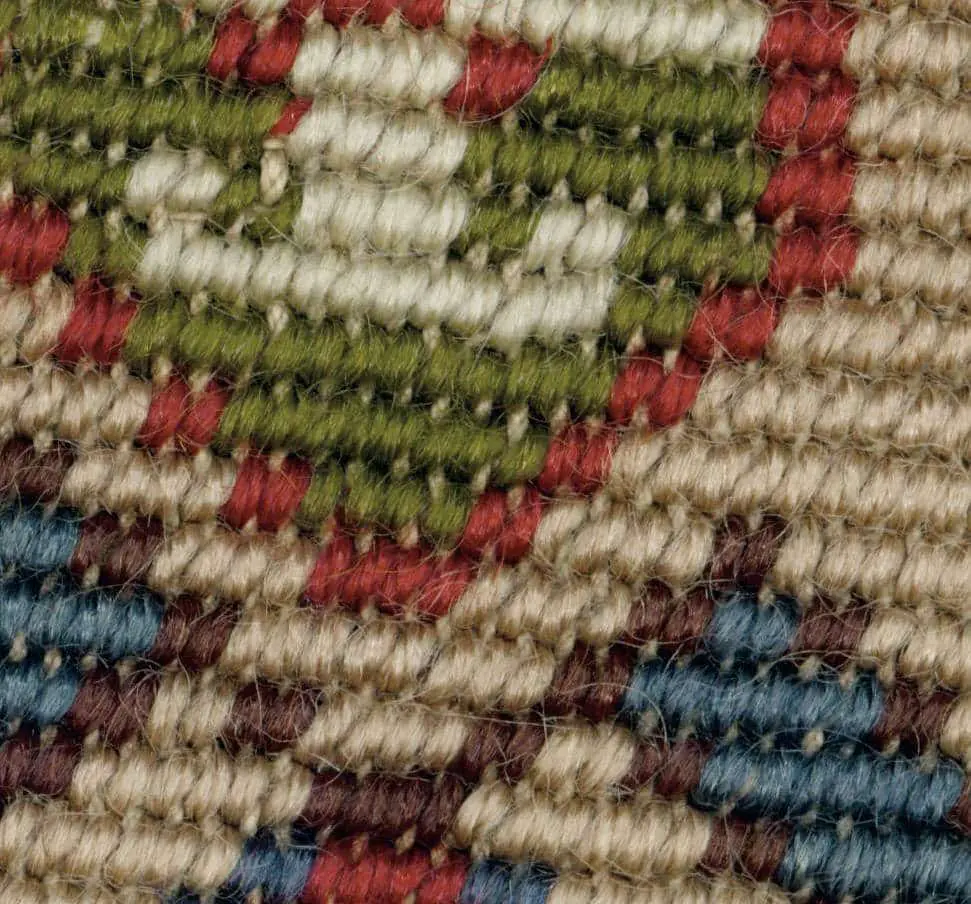
This rare and highly unusual embroidered wool rug, dating to the mid-19th century (1825–1870), presents a fascinating mystery for textile scholars. Measuring 70 inches by 50 inches (178 cm x 127 cm), the rug is executed in a style reminiscent of Kazak patterns. The composition is organized around a central octagonal medallion nested within concentric rectangular borders. While the motif vocabulary—including stepped forms, serrated zig-zags, latch-hooks, and bead motifs—strongly aligns with Transcaucasian and Central Asian visual language, the piece is embroidered rather than knotted, placing it outside the mainstream Caucasian rug canon.
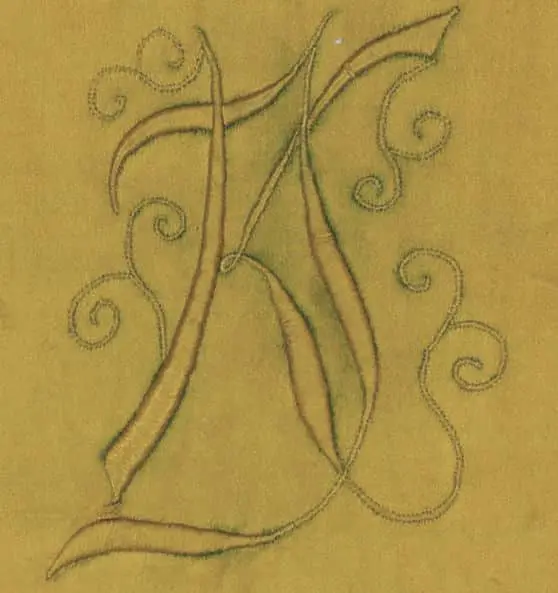
The rug is constructed on a wool base with a palette of terracotta red, sage green, indigo, and ivory. These colors are consistent with both natural dye traditions of the Caucasus and 19th-century European folk embroidery. The rug is finished with a European-style metallic border and a silk lining featuring an embroidered monogram. While Central Asian traditions like Suzani use embroidery, they typically favor curvilinear symbolism over the rigid architectural geometry seen here. The rug remains in almost perfect condition, with only minor damage to the silk lining.
Experts suggest that the combination of "Oriental" patterns with distinctly Western finishing techniques indicates a complex origin:

Payment Options: We primarily accept PayPal for all transactions. Credit and debit cards are not accepted. If you prefer to pay by personal check instead of PayPal, please note this preference in the "Additional comments" field when placing your order.Ordering Process
To receive your PayPal invoice, simply fill out the form.
Shipping Details: We ship all orders to the address associated with your PayPal payment. Please ensure your PayPal shipping address is current and accurate.A phone number is required during checkout, as our shipping carrier may need to contact you regarding delivery questions.Shipping RatesUnited States and Canada: $20International destinations (air mail): $40
