Copyright © 2026 Yorke Antique Textiles
.avif)

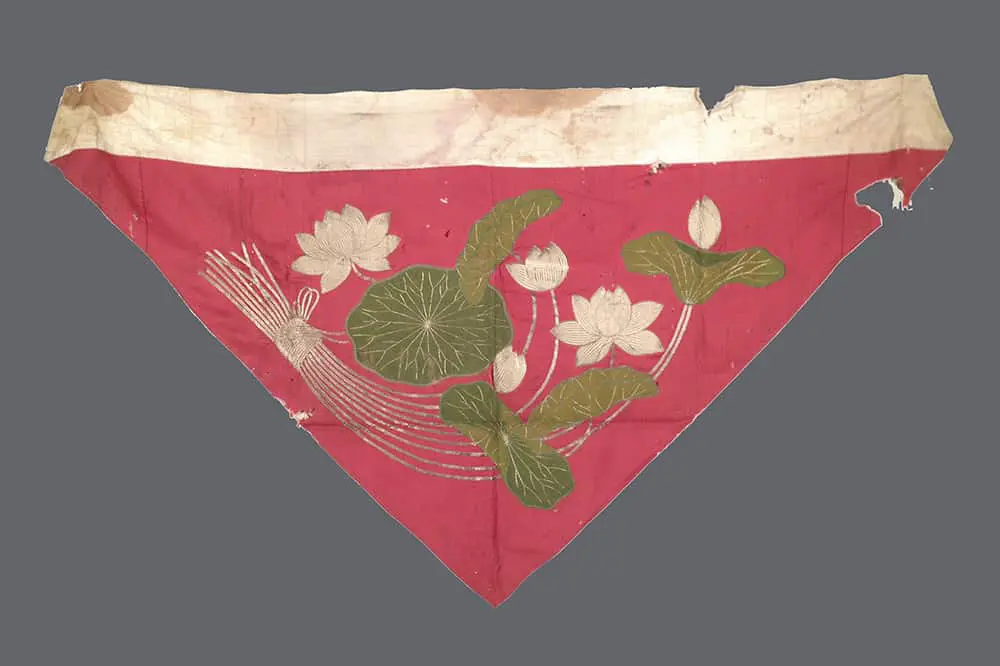
This monumental uchishiki (Buddhist altar cloth) dates to the mid-Edo period (1750–1825) and represents a significant example of large-scale Japanese liturgical art. Measuring a substantial 95 inches by 43 inches (241 cm x 109 cm), the textile is constructed from a traditional bast fiber ground, a durable material derived from the inner bark or stalks of plants like hemp or ramie.
The central composition features an elegant arrangement of lotus pond appliqués, including blooming white lotuses, budding flowers, and broad green leaves. These motifs are rendered with silk and metallic thread accents, anchored by a stylized bundle of stems that sweep across the vibrant red field. In Buddhist tradition, the lotus is a profound symbol of purity and spiritual awakening, as it rises from murky waters to bloom in pristine beauty. Currently in fair condition, the cloth exhibits several holes, staining, and a significant tear on the upper right edge, reflecting its extensive ritual history and the natural aging of its organic fibers.

Payment Options: We primarily accept PayPal for all transactions. Credit and debit cards are not accepted. If you prefer to pay by personal check instead of PayPal, please note this preference in the "Additional comments" field when placing your order.Ordering Process
To receive your PayPal invoice, simply fill out the form.
Shipping Details: We ship all orders to the address associated with your PayPal payment. Please ensure your PayPal shipping address is current and accurate.A phone number is required during checkout, as our shipping carrier may need to contact you regarding delivery questions.Shipping RatesUnited States and Canada: $20International destinations (air mail): $40
