Copyright © 2026 Yorke Antique Textiles
.avif)

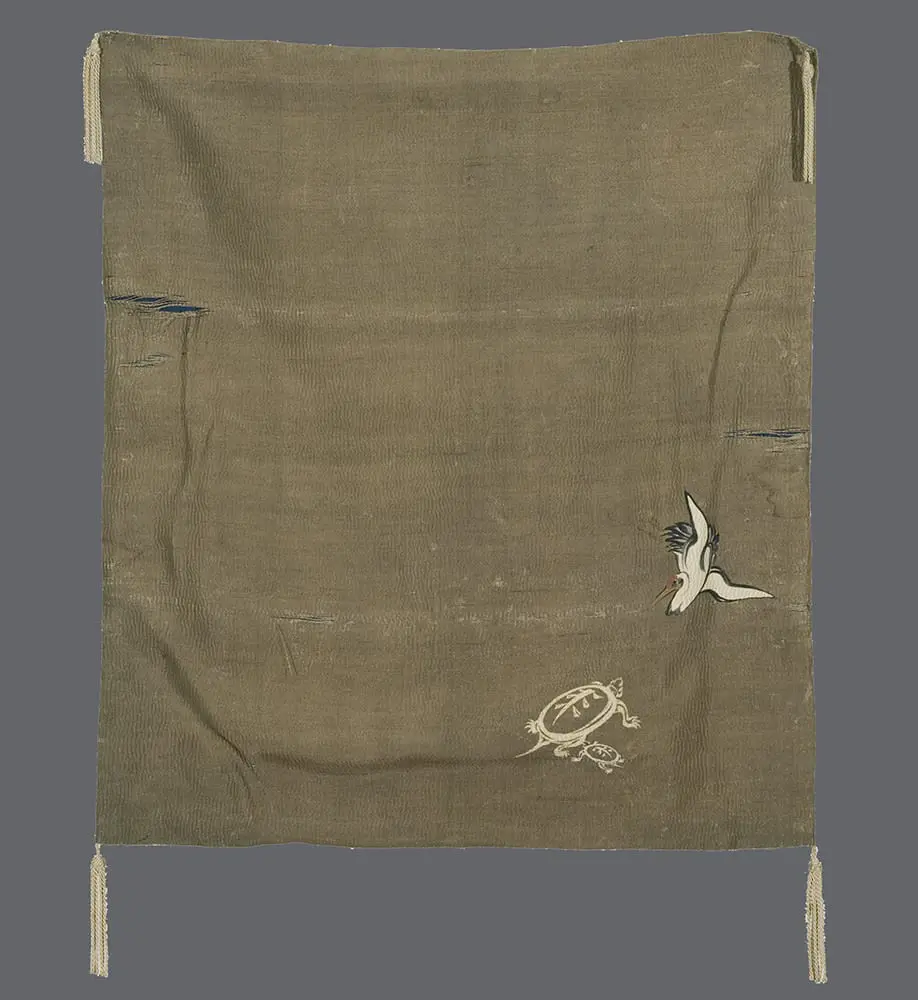

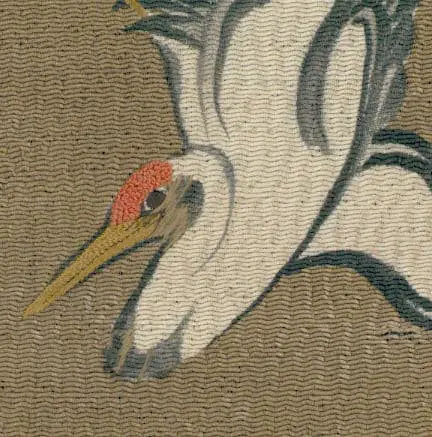
This distinctive silk fukusa (gift cover), dating from the late Edo period (1825–1868), showcases a rare combination of high-twist chirimen silk and meticulous hand-detailing. The ground fabric is a "wavy" silk crepe, a texture achieved by using highly twisted weft threads that cause the fabric to shrink and crinkle during the finishing process, creating its signature tactile surface.
The piece is decorated using the yuzen-dyeing technique, a complex paste-resist method that allows for painterly, multi-colored designs to be hand-applied without the colors bleeding. It is further accented with sagara embroidery, a specialized technique also known as "knot stitch" or "French knots" in Western traditions. Sagara is characterized by its soft, three-dimensional volume and fluffy, pile-like texture, which is used to add physical depth to specific motifs. Measuring 26 inches by 29 inches (66 cm x 74 cm), this fukusa remains a significant example of Edo-period craftsmanship, though it is in fair condition with noticeable silk splitting on both the front and back.

Payment Options: We primarily accept PayPal for all transactions. Credit and debit cards are not accepted. If you prefer to pay by personal check instead of PayPal, please note this preference in the "Additional comments" field when placing your order.Ordering Process
To receive your PayPal invoice, simply fill out the form.
Shipping Details: We ship all orders to the address associated with your PayPal payment. Please ensure your PayPal shipping address is current and accurate.A phone number is required during checkout, as our shipping carrier may need to contact you regarding delivery questions.Shipping RatesUnited States and Canada: $20International destinations (air mail): $40
