Copyright © 2026 Yorke Antique Textiles
.avif)


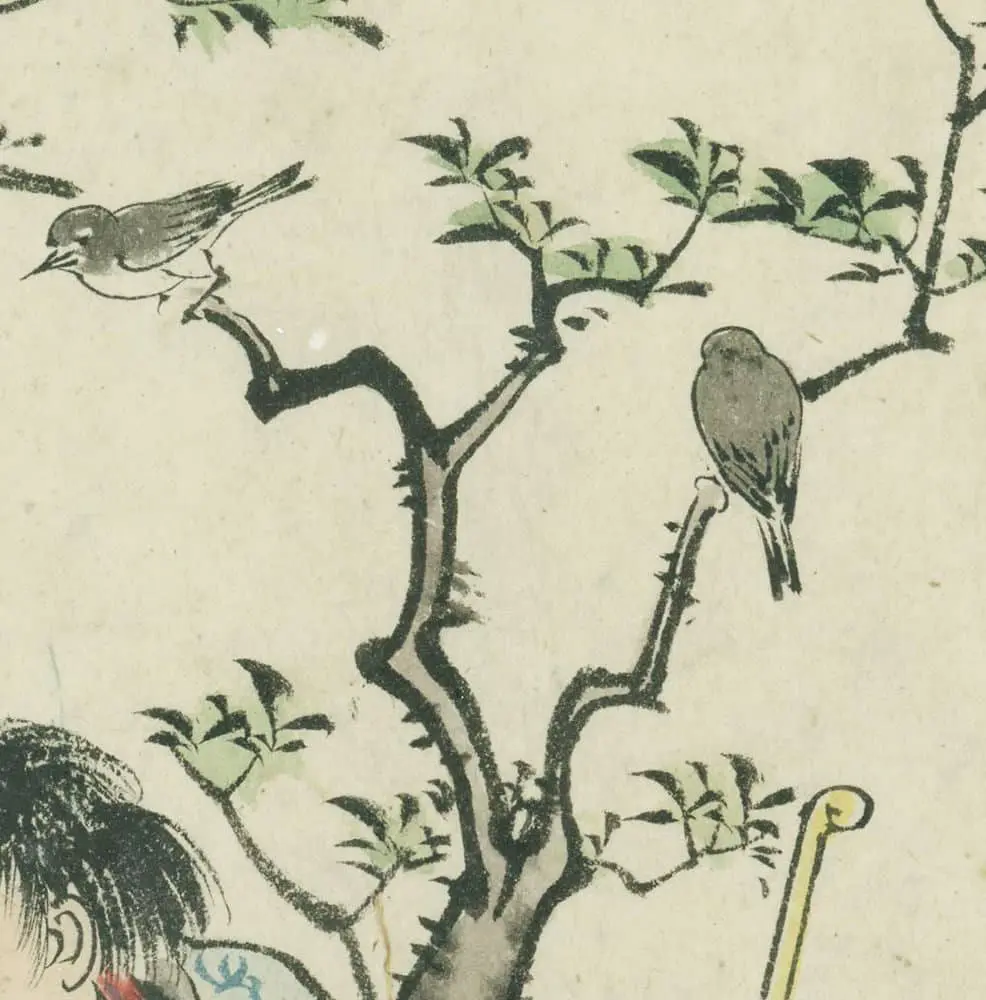
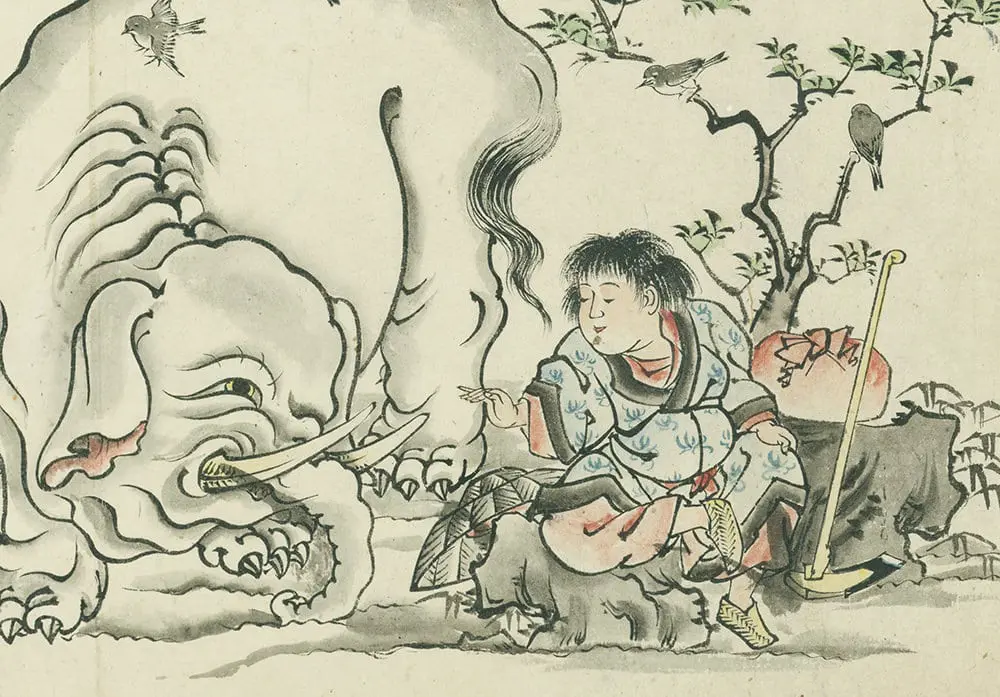

This whimsical hand-painted drawing is an original hinagata (kimono design template) from Japan, dating to the Meiji period (1868–1912). Rendered on traditional washi paper in Shizuoka prefecture, this piece functioned as a vital visual bridge between the artist and the silk dyers who executed the final garment. Measuring 10 inches by 15 inches (25 cm x 38 cm), the artwork is in very good condition and demonstrates the spirited, expressive brushwork typical of the late 19th-century Kyōsai school.
The composition centers on a charming interaction between a large, stylized white elephant and a young boy, possibly representing a deity or a figure from Buddhist folklore. The elephant is depicted with exaggerated, rhythmic folds and a gentle expression, its form anchored by thick, calligraphic ink outlines. Small sparrows flit around the scene, some resting on the elephant’s back, adding a sense of lively movement. Beside the elephant, the boy sits peacefully under a sparse tree, his robes detailed with blue and red pigments and a traditional floral pattern. The scene is grounded by soft grey washes suggesting a dusty path, while the untouched washi paper provides a sense of atmospheric light and space.

Payment Options: We primarily accept PayPal for all transactions. Credit and debit cards are not accepted. If you prefer to pay by personal check instead of PayPal, please note this preference in the "Additional comments" field when placing your order.Ordering Process
To receive your PayPal invoice, simply fill out the form.
Shipping Details: We ship all orders to the address associated with your PayPal payment. Please ensure your PayPal shipping address is current and accurate.A phone number is required during checkout, as our shipping carrier may need to contact you regarding delivery questions.Shipping RatesUnited States and Canada: $20International destinations (air mail): $40
