Copyright © 2026 Yorke Antique Textiles
.avif)

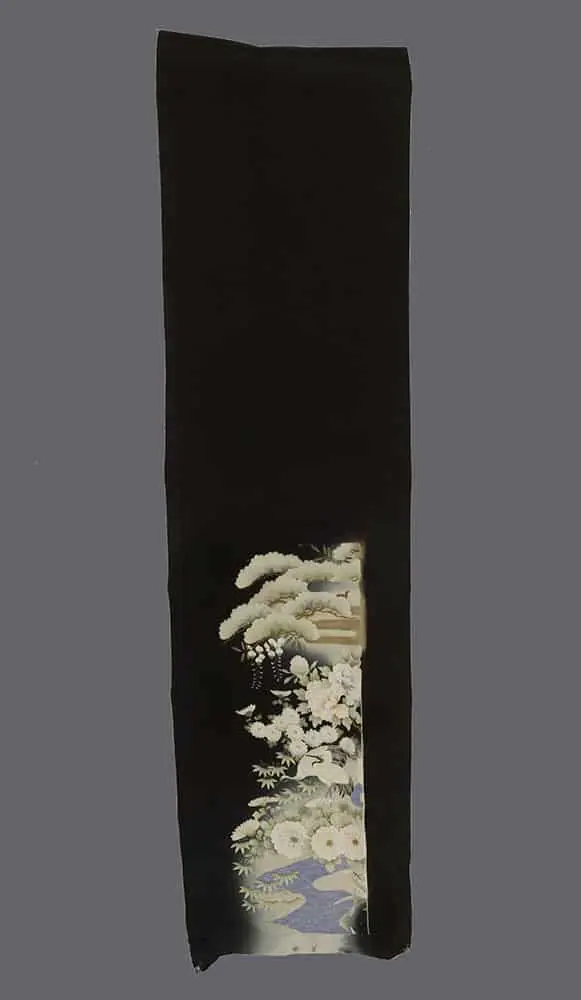
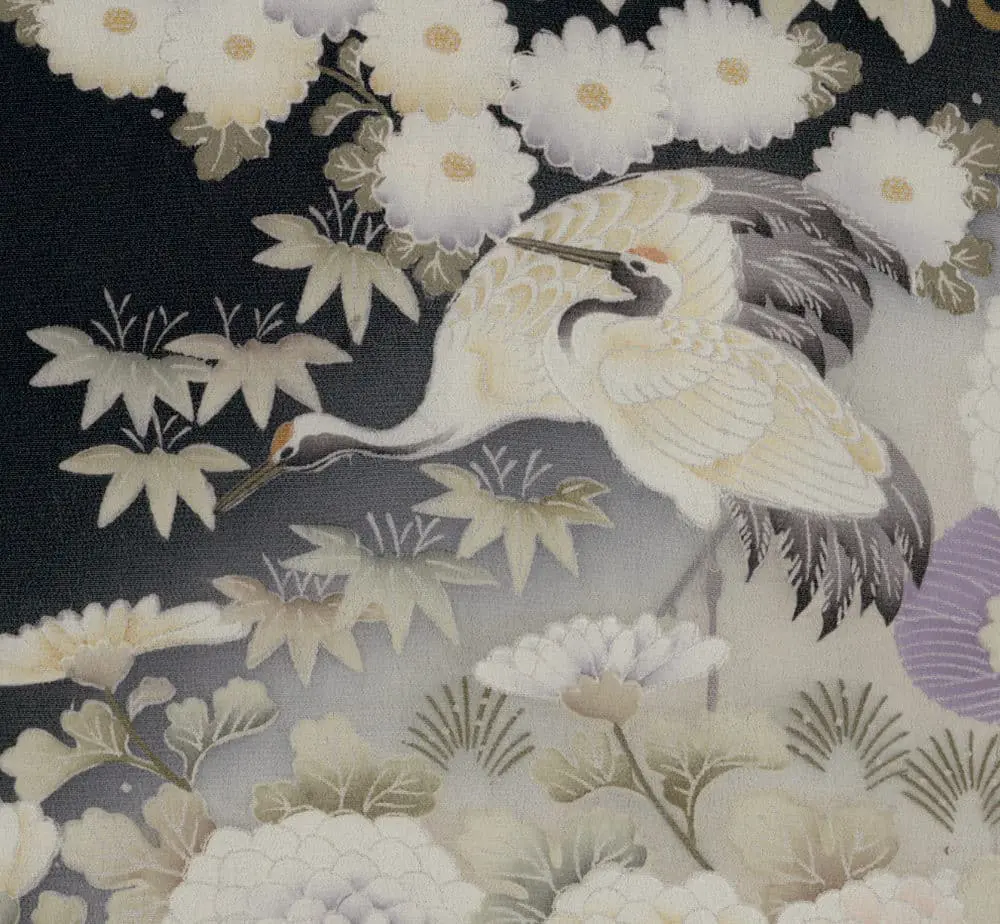
This silk summer crepe (ro) obi dates to the late Taisho or early Showa period (circa 1930). Measuring 14 inches by 150 inches (36 cm x 381 cm), the textile was part of the distinguished collection of Dr. Charles E. Mullin, a textile chemist who amassed a significant archive of regional garments during his travels in the 1920s and early 1930s. The piece is in excellent condition.
The garment is crafted from a deep black silk featuring the semi-transparent Ro weave, which uses horizontal openwork stripes to ensure breathability during Japan's humid summers. The lower portion of the obi features a masterful hand-painted and embroidered landscape. This lush composition includes white-capped pine branches (matsu), delicate purple wisteria (fuji), and large, creamy white chrysanthemums (kiku). At the base, a stylized stream in lavender and grey meanders through the floral arrangement, accompanied by a graceful crane, a traditional symbol of longevity.

Payment Options: We primarily accept PayPal for all transactions. Credit and debit cards are not accepted. If you prefer to pay by personal check instead of PayPal, please note this preference in the "Additional comments" field when placing your order.Ordering Process
To receive your PayPal invoice, simply fill out the form.
Shipping Details: We ship all orders to the address associated with your PayPal payment. Please ensure your PayPal shipping address is current and accurate.A phone number is required during checkout, as our shipping carrier may need to contact you regarding delivery questions.Shipping RatesUnited States and Canada: $20International destinations (air mail): $40
