Copyright © 2026 Yorke Antique Textiles
.avif)

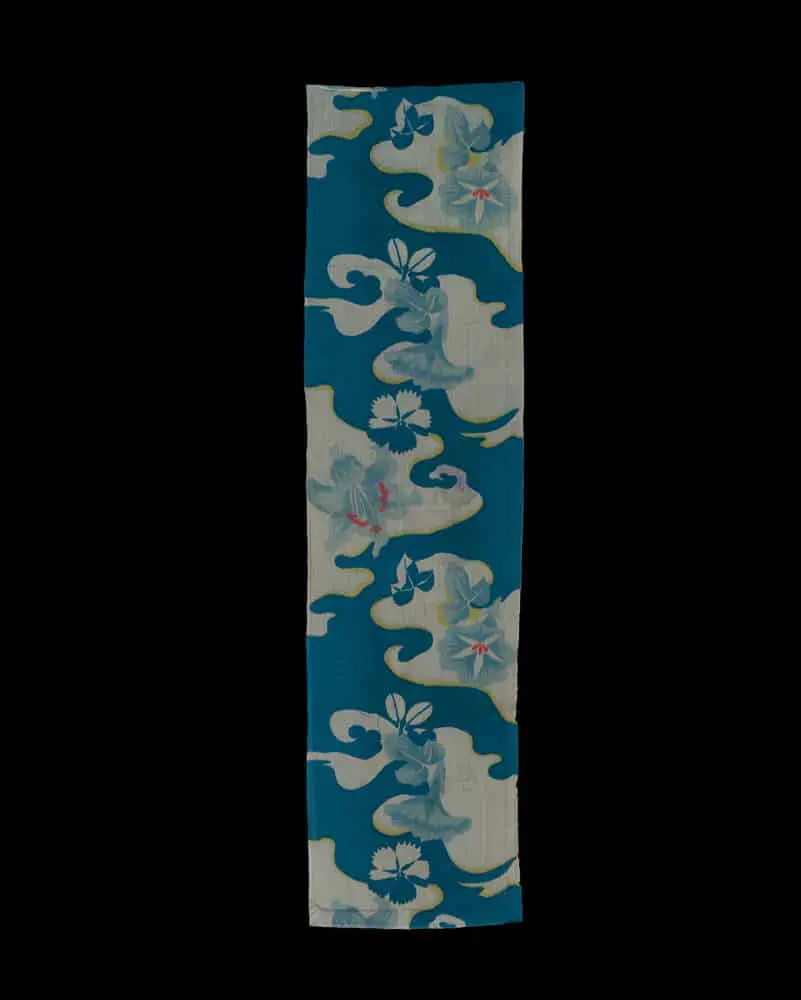
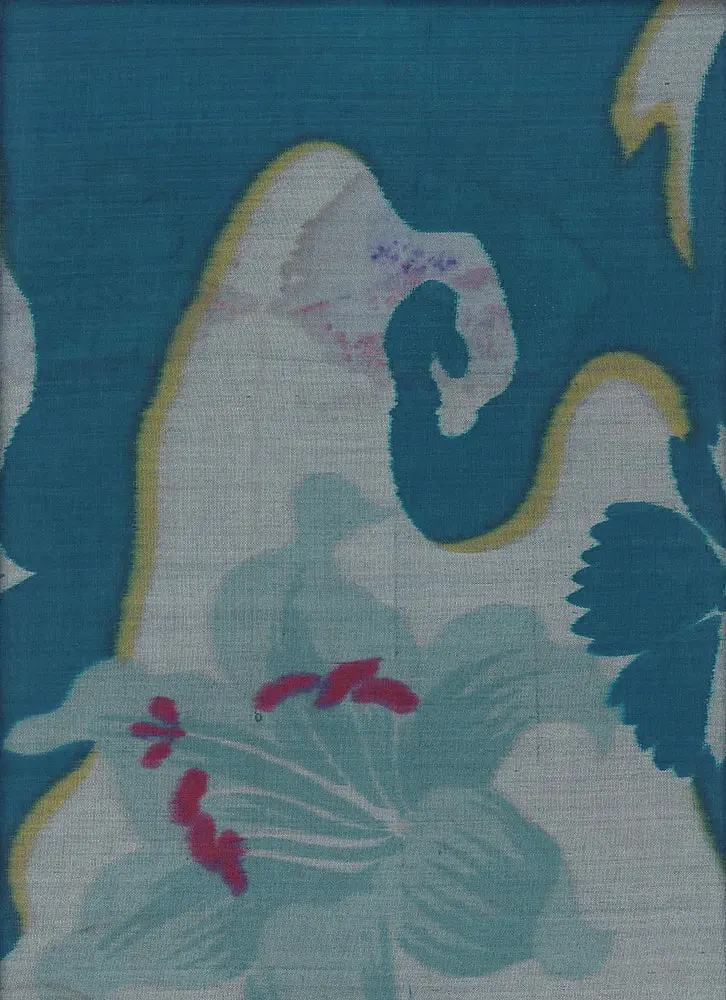
This evocative textile originates from Japan’s early Showa period (1930–1940) and is a scholarly example of the graphic, experimental nature of pre-war urban fashion. Measuring 14.25 inches by 64 inches (36 cm x 163 cm), the piece is a complete panel from a disassembled kimono and remains in very good condition. It is crafted from meisen silk, a material prized during this era for its slightly crisp texture and the unique "blurred" edges of its patterns, which are achieved by dyeing the threads before weaving.
The visual narrative features a medium blue and silver-white palette, defined by a background motif of swirling waves or a rolling river highlighted with cheerful yellow accents. Adorning this fluid landscape are delicate white and blue sakura (cherry blossoms) alongside large, striking turquoise lilies. Each lily is detailed with a vibrant red center, providing a focal point of high-contrast color. This composition reflects the pre-WWII aesthetic of combining classical seasonal symbols with bold, modern colors and the rhythmic, almost abstract movement of water. While a historic stain is present on the fabric, it serves as a testament to the textile's journey through time as a functional piece of mid-century art.

Payment Options: We primarily accept PayPal for all transactions. Credit and debit cards are not accepted. If you prefer to pay by personal check instead of PayPal, please note this preference in the "Additional comments" field when placing your order.Ordering Process
To receive your PayPal invoice, simply fill out the form.
Shipping Details: We ship all orders to the address associated with your PayPal payment. Please ensure your PayPal shipping address is current and accurate.A phone number is required during checkout, as our shipping carrier may need to contact you regarding delivery questions.Shipping RatesUnited States and Canada: $20International destinations (air mail): $40
