Copyright © 2026 Yorke Antique Textiles
.avif)

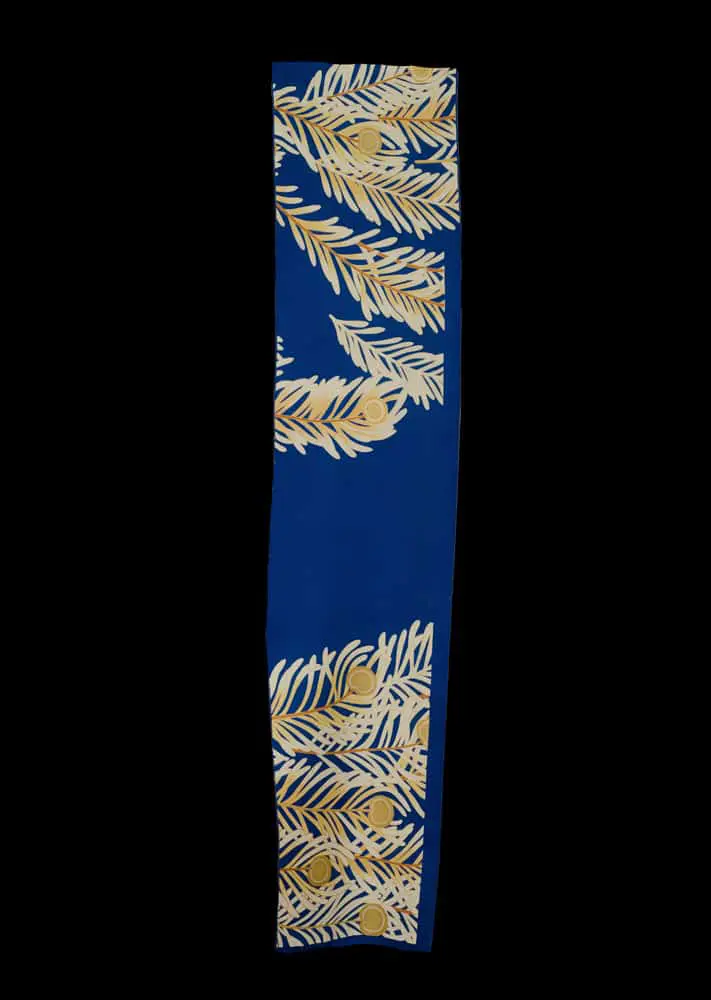
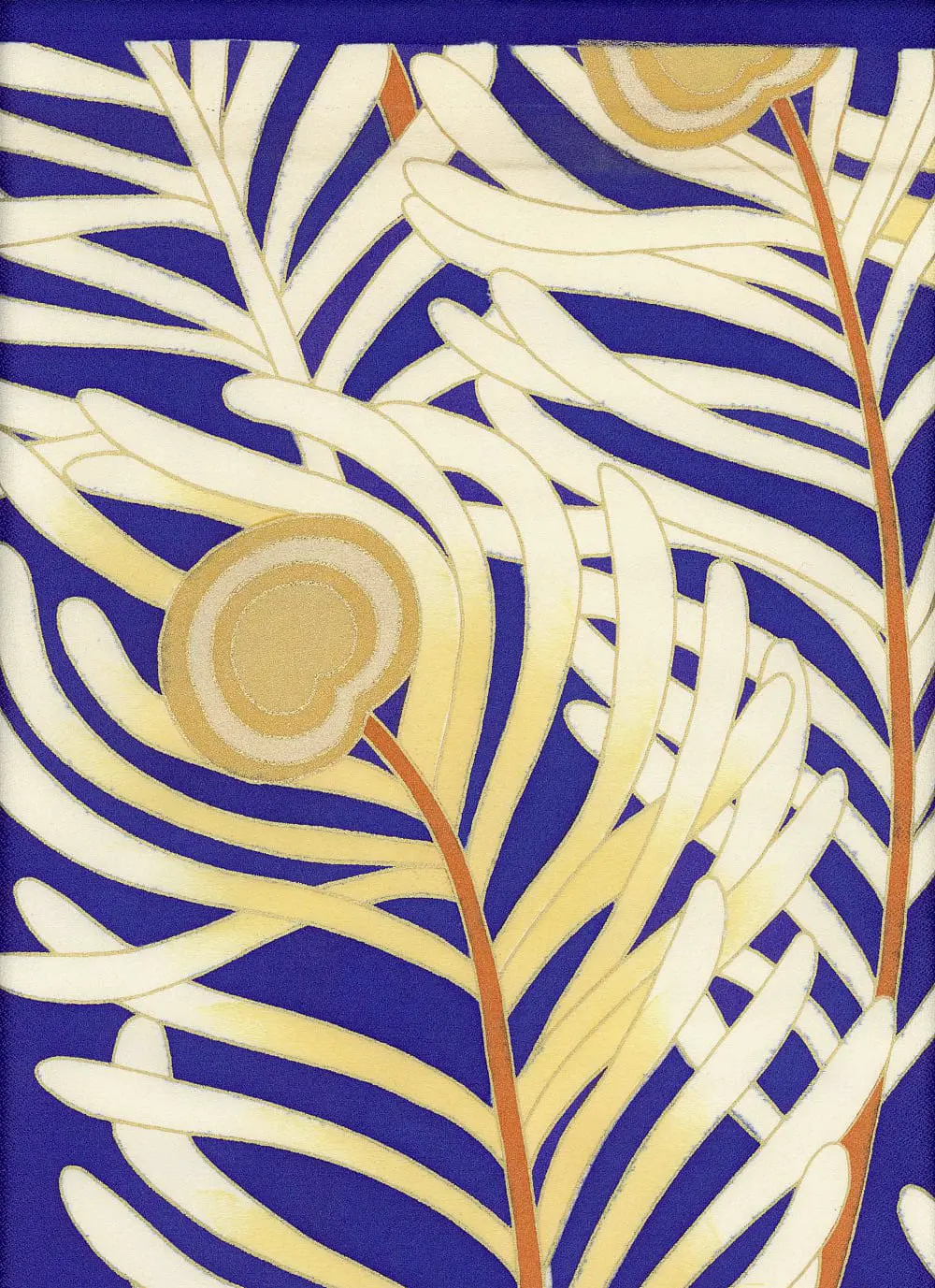
This breathtaking textile originates from Japan’s mid-Showa period (1950–1970) and is a scholarly example of the opulent, maximalist craftsmanship that defined high-status post-war formal wear. Measuring 14.5 inches by 69 inches (37 cm x 175 cm), the panel remains in excellent condition and showcases a profound level of hand-detailing. The substrate is a premium silk dyed in a saturated, deep royal blue that provides a dramatic, nocturnal stage for the avian imagery. Despite the dense technical embellishments, the silk retains a surprising softness and an excellent drape.
The visual narrative is dominated by an all-over composition of stylized kujaku (peacock) feathers. The feathers are rendered in a luminous palette of white, pale canary, and medium canary yellow, creating a radiant contrast against the dark blue ground. Nearly every structural element of the plumage is delicately defined by metallic gold outlining, while the central "eyes" of the feathers feature at least three distinct shades of gold to suggest depth and iridescence. Most notably, the piece incorporates metallic gold thread couching, a laborious technique where heavy gold threads are laid on the surface and stitched down, resulting in a three-dimensional, shimmering effect that catches the light from every angle.

Payment Options: We primarily accept PayPal for all transactions. Credit and debit cards are not accepted. If you prefer to pay by personal check instead of PayPal, please note this preference in the "Additional comments" field when placing your order.Ordering Process
To receive your PayPal invoice, simply fill out the form.
Shipping Details: We ship all orders to the address associated with your PayPal payment. Please ensure your PayPal shipping address is current and accurate.A phone number is required during checkout, as our shipping carrier may need to contact you regarding delivery questions.Shipping RatesUnited States and Canada: $20International destinations (air mail): $40
