Copyright © 2026 Yorke Antique Textiles
.avif)

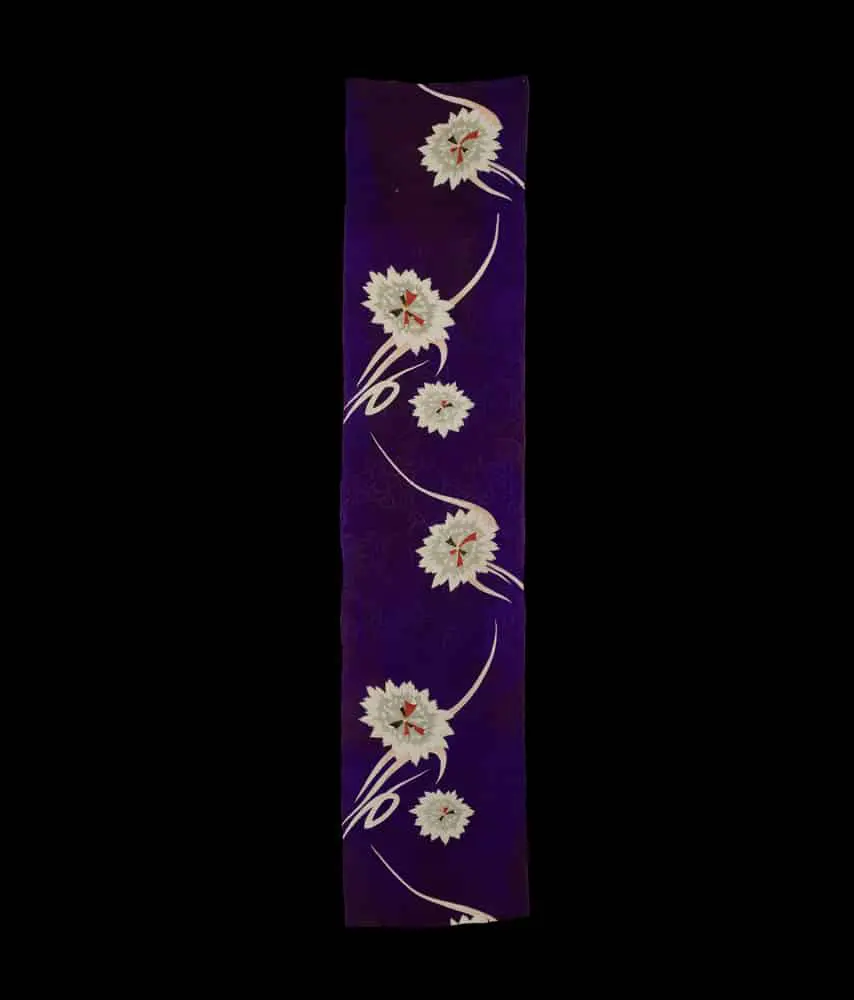
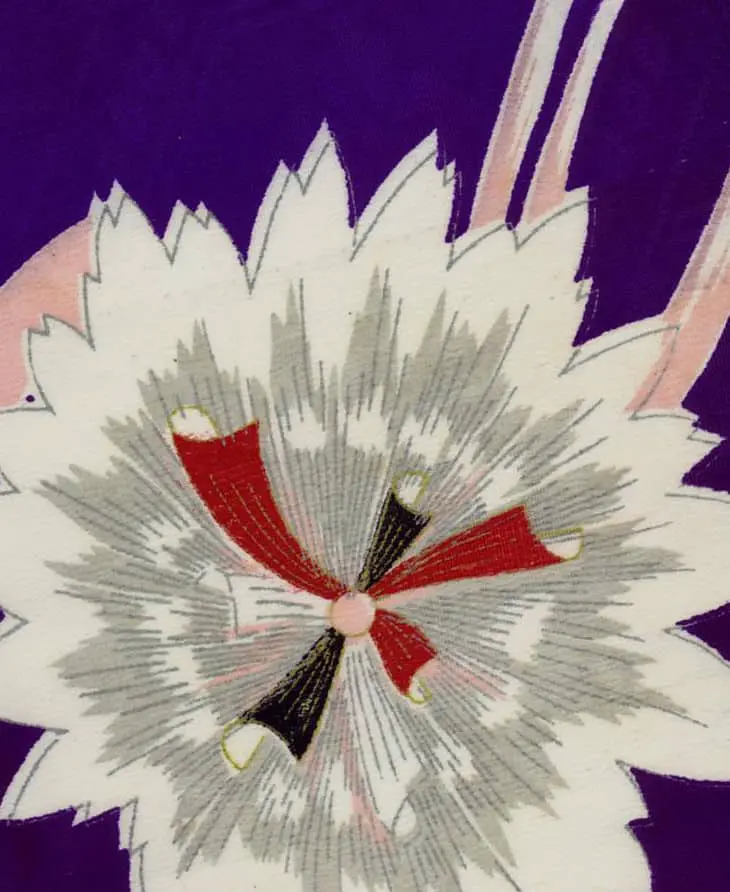
This vibrant textile originates from Japan’s late Showa period (1950–1980) and showcases the era's affinity for saturated colors and playful, feminine compositions. Measuring 13.25 inches by 61 inches (34 cm x 155 cm), the panel is a complete section from a disassembled kimono. The fabric is a lightweight silk with a noticeable sheen, possessing a delicate thinness that reveals small needle holes along the edges from its original garment construction. While in good condition overall, the piece features intentional variations in the purple background color and a vintage patina within some of the white sections of the flowers.
The visual narrative is set against a strikingly bright dark purple base that provides a dramatic stage for the primary motifs. Adorning the field are large, stylized white blossoms—likely chrysanthemums—accented with soft grey and vibrant red hues. Interspersed among the flowers are flowing ribbons in white and pink that meander vertically across the panel, creating a sense of rhythmic, celebratory movement. This combination of floral and ribbon motifs (noshi) is a traditional symbol of gift-giving and good fortune, updated here with a mid-to-late 20th-century color palette.

Payment Options: We primarily accept PayPal for all transactions. Credit and debit cards are not accepted. If you prefer to pay by personal check instead of PayPal, please note this preference in the "Additional comments" field when placing your order.Ordering Process
To receive your PayPal invoice, simply fill out the form.
Shipping Details: We ship all orders to the address associated with your PayPal payment. Please ensure your PayPal shipping address is current and accurate.A phone number is required during checkout, as our shipping carrier may need to contact you regarding delivery questions.Shipping RatesUnited States and Canada: $20International destinations (air mail): $40
